
How To Expunge Your Record For Free in California?
Why So Many People Search for “Free Expungement” in California
A criminal record can keep following you long after you have paid your fines, completed probation, and moved on with life. It can affect job applications, housing approvals, professional licensing, and even peace of mind. That is why one of the most common questions in California is simple and urgent: can you expunge your record for free?
The answer is often yes, but with an important catch.
“Free” usually does not mean the process is always automatic or that there are never any costs. It usually means one of these three things:
- You file the case yourself instead of hiring a lawyer
- You qualify for a fee waiver if your court charges filing fees
- You may already qualify for automatic record relief under California law, depending on your case
That makes this topic especially important in 2024 and beyond. More people are learning that California has expanded record-clearing opportunities, but many still do not know which path fits their case.
What “Expungement” Means in California
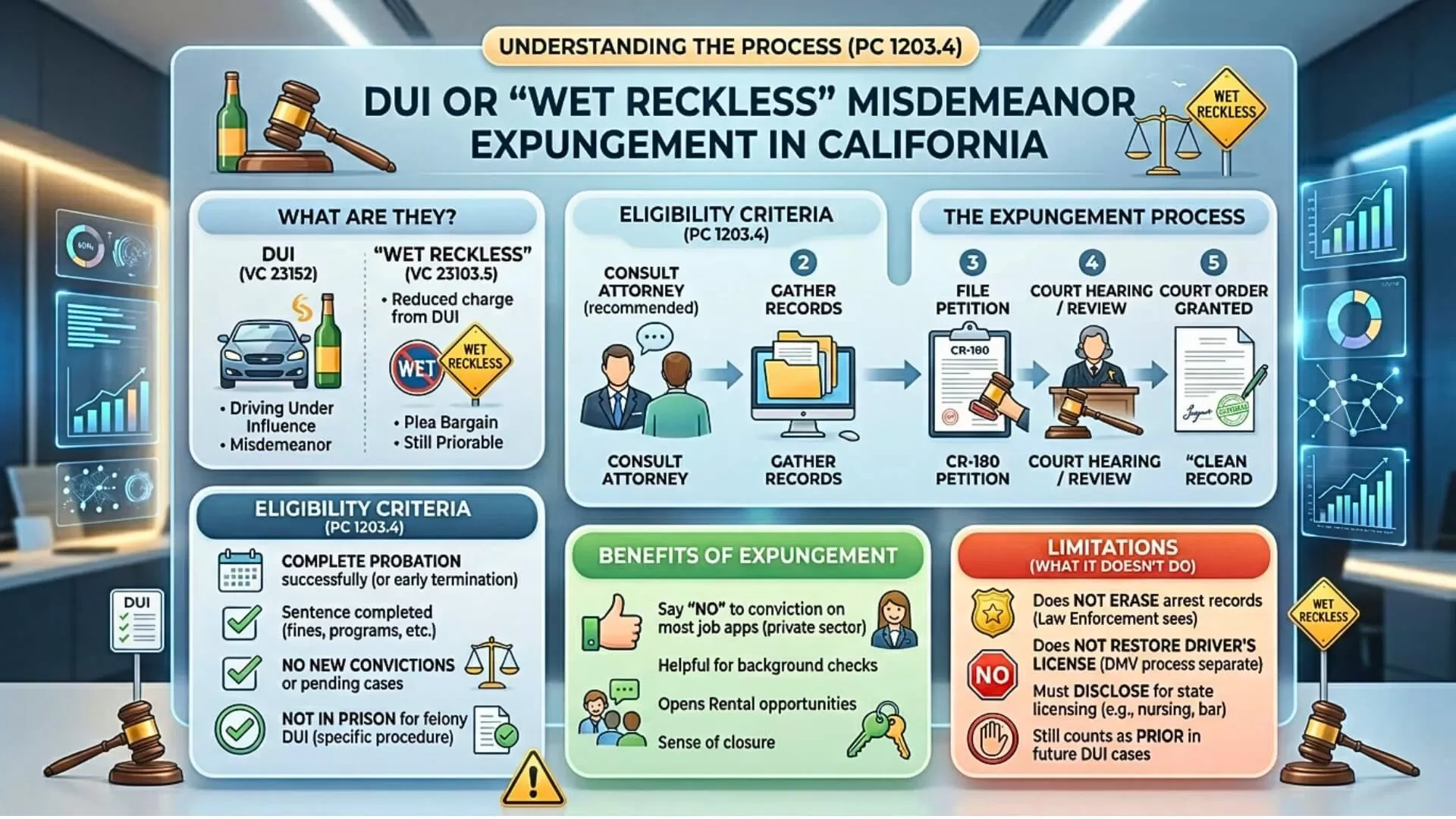
In California, the word “expungement” often refers to a dismissal of a conviction under Penal Code 1203.4. When granted, the court reopens the case, withdraws your guilty or no contest plea, and dismisses the case.
That is powerful relief, but it is not the same as pretending the arrest or conviction never happened.
| Relief Type | What It Usually Does | What It Does Not Do |
|---|---|---|
| Expungement / dismissal | Helps with private employment and lets you say the case was dismissed in many situations | Does not erase the case from court history |
| Record sealing | Limits public access to some records | May not apply to every conviction |
| Automatic relief | Clears eligible records without a separate petition in some cases | Does not cover every person or every offense |
For many people, the right question is not just “Can I expunge my record?” but “What type of relief am I eligible for, and can I get it without paying legal fees?”
Can You Really Expunge Your Record for Free?
Yes, in many situations you can pursue relief without paying a lawyer. But you should understand the difference between free legal fees and free total cost.
You may be able to do it for free if:
- You prepare and file the paperwork on your own
- Your court does not charge a filing fee for your petition
- You receive a fee waiver because of financial hardship
- Your case qualifies for automatic relief
You may still have costs if:
- Your county court charges filing fees
- You need certified copies of records
- You pay for fingerprints, mailing, or document retrieval
- You hire professional help
For people comparing DIY and paid help, it can be useful to review service options on the site’s California expungement pricing page.
| Filing Mistake | Risk Level |
|---|---|
| Asking for the wrong type of relief | █████ |
| Filing before probation is complete | ████ |
| Wrong county or wrong case number | ████ |
| Missing declaration or support details | ███ |
| Incomplete paperwork | ███ |
Who Qualifies for a California Expungement?
Eligibility is where many DIY filings succeed or fail. Before you spend time filling out forms, make sure your record actually qualifies.
In general, you may qualify if:
- You were convicted of a misdemeanor or certain felonies
- You completed probation successfully, or the court terminated probation early
- You are not currently charged with, on probation for, or serving a sentence for another offense
- The offense is not excluded from relief
DIY success likelihood by case type
| Case Type | DIY Fit |
|---|---|
| One old misdemeanor, probation completed | █████ |
| Straightforward eligible conviction | ████ |
| Older case with all terms finished | ████ |
| Multiple convictions in one county | ███ |
| Multiple counties | ██ |
| Felony reduction + dismissal needed | ██ |
| Prior probation violations / unusual sentencing | █ |
Common situations that may qualify
| Situation | Possible Outcome |
|---|---|
| Misdemeanor conviction with completed probation | Often eligible for dismissal |
| Felony reduced to misdemeanor, then dismissed | Often a strong path to relief |
| Conviction with no state prison sentence in many cases | May be eligible depending on statute and sentence details |
| Older case with all terms completed | Often worth reviewing for relief |
Start
│
├── Did you complete probation? …………….. Yes / No
│
├── Are you currently charged, on probation,
│ or serving a sentence in another case? …… Yes / No
│
├── Is the offense eligible for relief? ……… Yes / No
│
├── Do you need dismissal only,
│ or reduction first? ……………………. Check case type
│
└── File petition or confirm automatic relief
Situations that may not qualify, or need extra analysis
- Certain sex offenses involving minors
- Cases where probation was violated and never resolved properly
- Cases with open warrants or unpaid obligations that still matter to the court
- Convictions that led to prison sentences in circumstances not covered by current relief laws
- Cases where the person is still serving a sentence
This is where people sometimes get tripped up: two records can look similar, but one qualifies and the other does not. The details matter.
Free Paths to Record Clearing in California
There is more than one way to clean up a record without spending heavily. That is good news, because not everyone needs the same strategy.
1. File the expungement yourself
This is the classic free route. You gather your case information, complete the required court forms, file them with the court, and wait for the judge to rule.
This option is best for people who:
- Know the county and case number
- Completed probation
- Have a straightforward misdemeanor or eligible felony
- Feel comfortable following court instructions carefully
2. Ask for a fee waiver
If the court charges filing fees, you may be able to ask the court to waive them. Courts generally consider your income, benefits, and financial hardship.
People often qualify if they:
- Receive public benefits
- Have low income
- Cannot afford basic household needs and court fees at the same time
3. Use legal aid or nonprofit help
Some Californians qualify for free or low-cost help through legal aid offices, reentry clinics, clean slate events, public defender reentry programs, and nonprofit community organizations.
This path can be especially useful if:
- You have multiple cases in different counties
- You are unsure whether your conviction is eligible
- You need both expungement and reduction of a felony
- You want help but cannot afford private representation
4. Check whether your record already qualifies for automatic relief
California has expanded automatic record-clearing mechanisms in recent years. In some cases, arrests and convictions may be marked as dismissed or sealed without you filing a traditional expungement petition.
That said, many people still file because:
- The record was not cleared automatically
- They want confirmed court relief
- They need a more targeted remedy
- Their case falls outside automatic relief categories
Step-by-Step: How To Expunge Your Record for Free in California
Now let’s get into the real process.
Step 1: Get your case details
Start by collecting the basic information for every case you want to clear:
- Full legal name used in the case
- Date of birth
- County where the case was filed
- Case number
- Charges and final outcome
- Date probation ended
- Proof of completed terms, if available
If you do not know your case number, contact the criminal court clerk in the county where the case was filed. You may also be able to search local court records or request a copy of your docket.
Step 2: Confirm the exact type of relief you need
Not everyone needs the same filing. Depending on the record, your path may include:
| Your Situation | Possible Filing Goal |
|---|---|
| Misdemeanor conviction | Dismissal / expungement |
| Eligible felony | Reduction first, then dismissal |
| Arrest with no conviction | Record sealing or arrest relief |
| Completed probation but old conviction remains public | Petition for dismissal |
This is one of the biggest mistakes people make when trying to do it for free: they file for the wrong remedy.
Step 3: Check whether probation is completed
For many expungement petitions, successful completion of probation is central. If you are still on probation, you may need to ask the court for early termination first before requesting dismissal.
That means your free strategy could be one of these:
- Finish probation, then file
- Ask for early termination of probation, then file for dismissal
- Explore automatic relief or another form of record clearing if available
Step 4: Gather the right forms
The correct forms can vary by county and case type. Some counties provide local packets, while others rely on statewide forms plus supporting declarations.
A strong DIY filing usually includes:
- The petition or application
- A proposed order for the judge
- A declaration explaining why relief should be granted
- Any supporting proof showing rehabilitation, completion, and stability
What makes a DIY petition stronger?
A free filing does not have to be weak. Judges often respond well to petitions that are organized, specific, and respectful.
Your declaration should focus on facts such as:
- You completed probation and paid what was required
- You have stayed out of trouble
- You are working, training, or supporting family
- The record is blocking employment, housing, or licensing
- You are seeking a fresh start and have taken rehabilitation seriously
A short, clear declaration is often better than an emotional one that wanders.
Mistakes That Can Delay a Free Expungement Filing
Even when someone is eligible, the petition can stall because of preventable errors.
| Mistake | Why It Hurts Your Case |
|---|---|
| Filing in the wrong county | The court cannot act on a case it does not control |
| Using the wrong case number | The petition may be rejected or delayed |
| Asking for the wrong remedy | The judge may deny relief even if another remedy was available |
| Filing before probation is complete | The petition may be premature |
| Leaving out a declaration | You lose a chance to show rehabilitation and need |
A Smart Reality Check Before You File
A free filing is often worth trying, especially for simple records. But “doing it yourself” works best when your case is truly straightforward.
It may not be simple if you have:
- Multiple convictions
- Different counties
- Prior probation violations
- A felony that may need reduction first
- Uncertainty about whether your case was automatically cleared
The more complicated the record, the more important it becomes to choose the right filing path from the start.
How To File a Free Expungement Petition in California
Once you have confirmed eligibility and collected your case information, the actual filing process becomes much more manageable.
Prepare your paperwork carefully
Before submitting anything, review each form line by line. Court clerks are not your legal adviser, so they may reject incomplete paperwork without telling you how to fix the strategy behind it.
Use this checklist:
| Filing Task | Why It Matters |
|---|---|
| Confirm your full name matches the court record | Prevents processing delays |
| Double-check the case number | Ensures the petition is attached to the correct file |
| List the exact conviction and code section | Avoids confusion about what relief you want |
| Attach a declaration | Gives the judge context and a reason to grant relief |
| Sign and date everything | Unsigned forms are often rejected |
File in the correct courthouse
Your petition usually needs to be filed in the same court that handled the criminal case. If you had cases in more than one county, you may need separate filings.
That matters because people often assume there is one statewide expungement application. There is not. California relief is tied to the court where the case was prosecuted.
Request a hearing if required
Some courts decide expungement requests based only on the paperwork. Others schedule a hearing. If a hearing is set, be ready to explain:
- that you completed the terms of your sentence
- that you are not currently in trouble on another case
- that you are seeking work, housing, licensing, or a better future
- that granting relief supports rehabilitation and public policy
A calm and direct explanation usually works better than a dramatic one.
How To Ask for a Fee Waiver
If court filing costs are the obstacle, a fee waiver may be the difference between putting this off and moving forward now.
When a fee waiver may help
You may qualify if you:
- receive public assistance
- have very low monthly income
- support dependents
- cannot afford both essential living costs and court fees
Documents that may help support a waiver request
| Document | Example |
|---|---|
| Proof of income | Pay stubs or unemployment records |
| Proof of benefits | SNAP, SSI, Medi-Cal, or similar |
| Household expenses | Rent, utilities, childcare |
| Bank balance information | Shows limited available funds |
A strong waiver request is not about writing something persuasive. It is about showing the court, clearly and honestly, that the fee would create hardship.
What Happens After the Judge Grants an Expungement
Getting the order granted is a major step, but it is not the final practical step.
What you should do next
- Get a copy of the signed order
- Keep digital and printed copies in a safe place
- Update your resume and job application language where appropriate
- Check your background record after some time to make sure the update appears
- Be prepared to explain truthfully that the case was dismissed if asked in a setting where disclosure is still required
Why the order matters in real life
| Area | Possible Benefit |
|---|---|
| Employment | Private employers may view a dismissed case more favorably |
| Housing | Can reduce concern during background screening |
| Education | May improve confidence when applying for programs |
| Licensing | Can help show rehabilitation, though boards may still review the record |
| Personal peace of mind | Many people feel they can finally move forward |
What an Expungement Does Not Do
This part is important because online advice often oversells what California record relief can accomplish.
An expungement generally does not:
- erase the case from every database
- restore gun rights
- eliminate immigration consequences
- prevent law enforcement or some government agencies from seeing the case
- guarantee approval for every job or license
That does not make it less valuable. It just means you should go into the process with realistic expectations.
Free Expungement vs Paid Help
Many people start with the goal of doing everything for free, then realize their case has complications. Others pay for help when they could have handled it themselves. The right path depends on complexity.
| Situation | DIY May Work Well | Paid Help May Be Smarter |
|---|---|---|
| One old misdemeanor | Yes | Usually not necessary |
| Completed probation, simple record | Yes | Optional |
| Multiple counties | Possible, but harder | Often helpful |
| Felony reduction plus dismissal | Sometimes | Often helpful |
| Unsure about eligibility | Risky alone | Helpful for strategy |
| Prior violations or unusual sentencing | More difficult | Often worth considering |
Tips To Improve Your Chances of Success
A free expungement petition is more likely to succeed when it tells a complete story of rehabilitation.
Include practical proof of progress
Helpful examples include:
- steady employment
- vocational training or school
- counseling or treatment completion
- volunteer work
- family responsibilities
- letters showing good character
Keep your declaration focused
A strong declaration usually answers three questions:
| Question | Good Direction |
|---|---|
| What happened? | Briefly identify the conviction and that the sentence is complete |
| What has changed since then? | Show growth, accountability, and stability |
| Why do you need relief now? | Explain the barrier to work, housing, or opportunity |
Do not overcomplicate it. Judges read many filings. Clarity helps.
California Expungement FAQ
Can I expunge a misdemeanor for free in California?
Often yes. A misdemeanor is one of the most common types of cases people handle on their own, especially when probation is complete and the record is straightforward.
Can I expunge a felony for free?
Sometimes, but felony cases are more technical. Some require reduction to a misdemeanor before dismissal. That can make DIY filing harder.
Is expungement automatic in California?
Some records may qualify for automatic relief, but not every record does. Many people still need to file a petition to get the relief they want.
How long does the process take?
It varies by county, court workload, and whether a hearing is required. A simple filing may move faster than a case involving multiple convictions or missing records.
Can I say I do not have a conviction after expungement?
In many private employment contexts, a dismissal improves how you can answer questions, but there are exceptions. Certain government, licensing, and other regulated settings may still require disclosure.
Do dismissed cases still show up on background checks?
They can. The key difference is that the case may show as dismissed rather than as an open or unresolved conviction history.
The Bottom Line on How To Expunge Your Record for Free in California
If you are asking how to expunge your record for free in California, the most honest answer is this: yes, it may be possible, especially if your case is simple, probation is complete, and you qualify for a fee waiver or can file on your own.
The process becomes much more realistic when you break it into parts:
- confirm eligibility
- gather your court details
- use the correct forms
- file in the right court
- ask for a fee waiver if needed
- present a clear declaration showing rehabilitation
For many Californians, that effort can lead to a dismissed case, better job opportunities, stronger housing applications, and a genuine second chance.
The phrase “free expungement” can sound too good to be true, but in many cases it simply means taking the right steps yourself and avoiding unnecessary costs. When your record is holding you back, that effort can be one of the most valuable things you do for your future.